

Three of Pentacles: the worker on a platform
Content version · · Sources & references
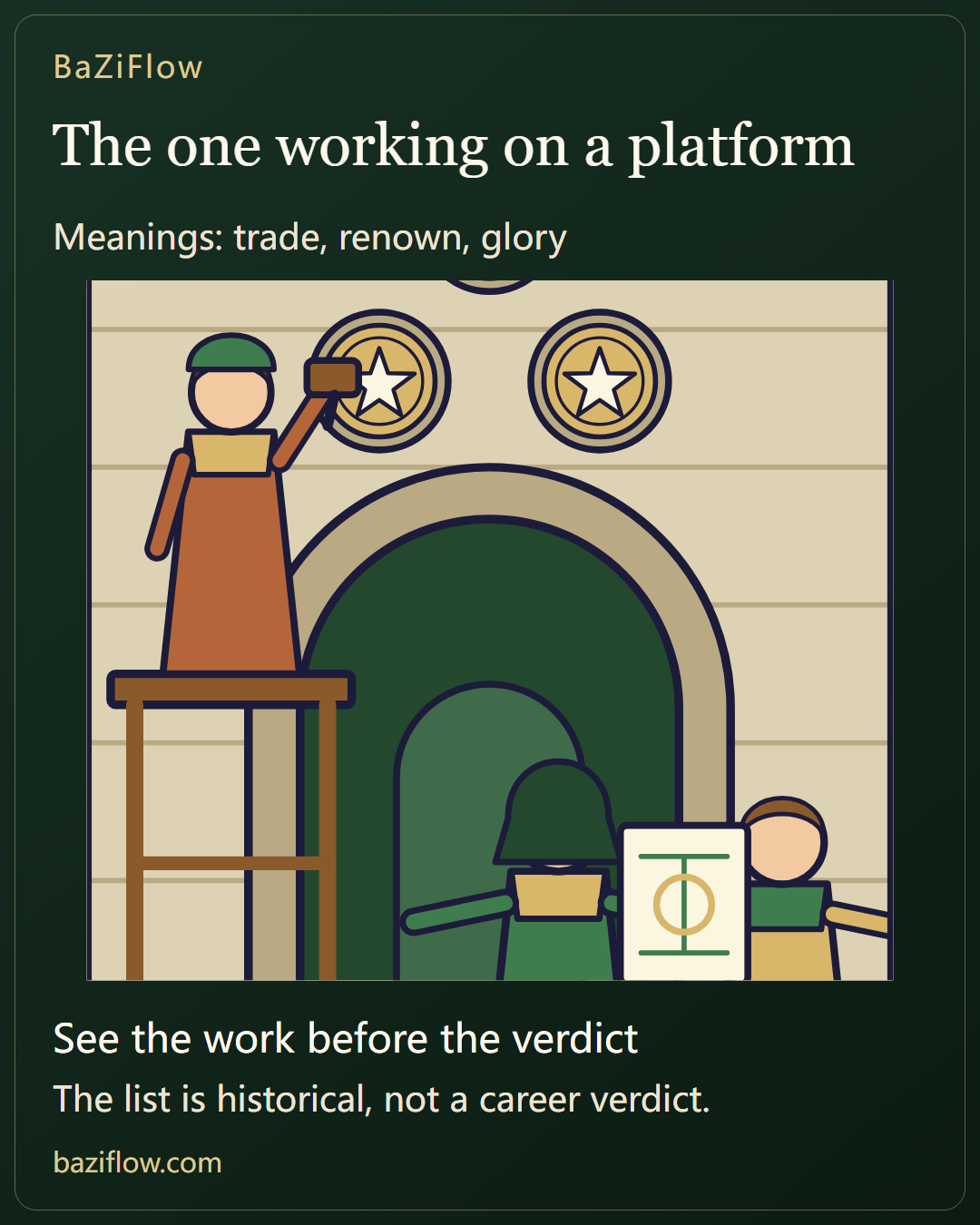
The Three of Pentacles shows a sculptor at work in a monastery. See how Waite's list slides from skilled labour to renown, then use a wobbly dining chair to separate the doer, the standard and the inspector.
The short version6 min read
The Three of Pentacles shows one person working at stone in a monastery. The first half of Waite's list is craft; the second half turns to renown and glory.
- Waite's description is one sentence: a sculptor at his work in a monastery. He adds a pointer to the Eight of Pentacles, where the novice has been paid and now labors in earnest.
- The list begins with métier, trade, skilled labour, then turns to nobility, aristocracy, renown, glory, which he says is the usual way of reading it.
- Reversed gives mediocrity, puerility, pettiness, weakness, "in work and otherwise"; the extras name celebrity for an eldest son and, reversed, only "depends on neighboring cards".
Read first
The sculptor on the platform: a working scene in a monastery
Waite writes one sentence for this card: a sculptor at his work in a monastery. He then sends the reader to the design of the Eight of Pentacles: the novice shown there has been paid and now labors in earnest.
The Three of Pentacles: the worker on a platform
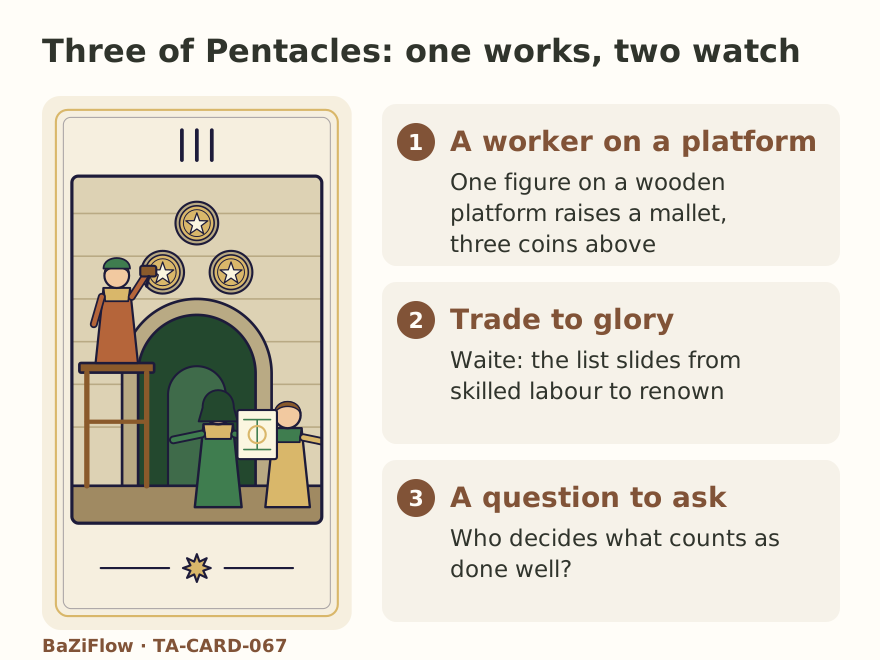
The Rider-Waite-Smith picture is a pointed-arched stone hall. Three pentacles are set into the tracery of the arch. At the left a figure stands on a wooden bench with his back to us, carving at the wall. At the right two figures stand beside him, one in a dark habit and one in a cloak dotted with red, looking on. In the BaZiFlow card the worker raises a mallet and one of the two figures below holds up a plan; the plan is in the RWS picture too, but Waite does not write it.
Enlarge diagram · scroll sideways to read
From "skilled labour" to "renown and glory": the two halves of the list
The first half of Waite's divinatory meaning is métier, trade, skilled labour. Then comes a turn: usually, however, it is regarded as a card of nobility, aristocracy, renown, glory.
Métier, trade, skilled labour; usually, however, regarded as a card of nobility, aristocracy, renown, glory.
Enlarge diagram · scroll sideways to read
The words "usually, however" deserve a pause. The first half can be read straight off the picture, a sculptor working; the second half is the more common reading, yet it has already left the picture. The extras turn once more: "if for a man, celebrity for his eldest son", 1910 wording in which the renown lands on another person. For the reversed card the extras give no words, only "depends on neighboring cards".
Compared with the Eight: the apprentice has been paid and now works in earnest
Waite reads this card together with the Eight of Pentacles. The Eight shows a stone-worker displaying finished pieces like trophies, and its list runs through employment, commission and craft skill, with a hint that all this may still be a preparatory stage.
Enlarge diagram · scroll sideways to read
The sculptor, the monastery, the coins in the arch
- The sculptor
- The only person Waite names. He does not say who the two beside him are.
- The monastery
- Waite gives the place and no explanation. As general background, medieval monasteries and church building sites were important places for stone work and carving, so setting the work there is not odd.
- Three coins in the arch
- Set in the tracery of the vault, a detail of the RWS picture that Waite does not mention. Some teaching reads "three" as three people dividing the work, a borrowing.
How to read it: a loose-jointed dining chair, and who says "fixed"
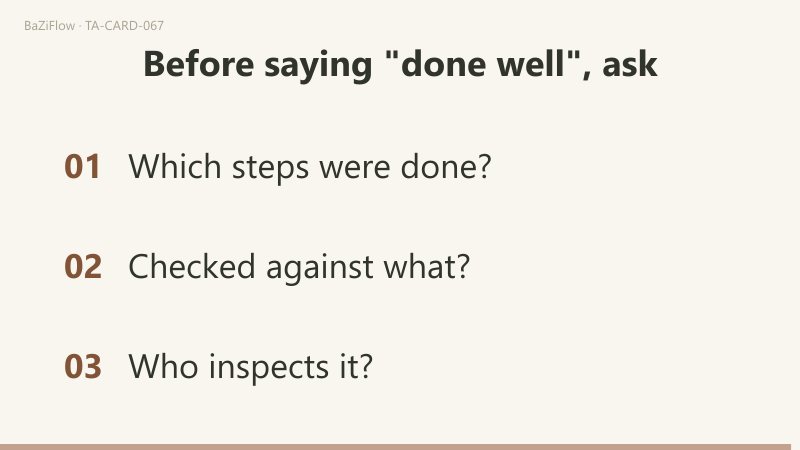
The three people in the picture can stand for three roles in getting a thing done: the one who works, the plan he checks against, and the one who looks on and inspects. The slide in the word list says the same: "what was done" and "how it is judged" are two matters, and the order should not be reversed.
The one who works: the step in hand
Write down the steps actually taken: scrape off the old glue, apply new glue, clamp it overnight. The "skilled labour" of the first half is exactly this kind of work that can be pointed at.
The thing it is checked against
What stands in for the plan on the card is the tenons of the other three legs: the new tenon should match them in thickness. With nothing to check against, "good" has no meaning.
The one who inspects
The people beside the platform are the inspection: someone from the household sits on the chair and rocks it, listening for a creak. Renown comes after these three and cannot speak for them in advance.
Enlarge diagram · scroll sideways to read
With the three roles kept apart
Visible
- Which steps, checked against what
- Who does the inspecting
Not visible
- How skilled the maker is
- That others will praise it
Next
- Write the standard first
- Inspect after the overnight clamp
Reversed and neighboring cards: mediocrity, pettiness, "in work and otherwise"
Waite's reversed list is mediocrity, "in work and otherwise", puerility, pettiness, weakness. The phrase "in work and otherwise" shows that the run of words is not only about craft but also about smallness and shallowness in conduct generally. The extras give no words for the reversed card, only that it depends on neighboring cards.
Enlarge diagram · scroll sideways to read
Three cards that place the work elsewhere
The stone worker with his trophies
A stone-worker showing his pieces like trophies; employment, commission, craft skill, maybe still preparing.
The one watching ships at sea
Waite writes established strength, enterprise and trade, and "able co-operation in business".
The house behind the archway
The list is gain, riches, family matters and the abode of a family; there the arch leads to a household.
Questions readers ask next
Is the Three of Pentacles a "career luck" card?
The first half of the list is indeed craft and labor, but the second half turns to renown and glory, and the extras mention an eldest son's celebrity. The picture has one person working at stone while others look on. Ask whether "what is done" and "what is judged" are the same thing in your question.
How does the Three differ from the Eight of Pentacles?
Waite sets the two designs side by side: the novice of the Eight has been paid, and in the Three he labors in earnest. The Eight's list still hints at preparation, while the Three lands on the work itself and the standing that comes with it.
How is the Three of Pentacles read reversed?
Waite gives mediocrity, puerility, pettiness and weakness, and adds "in work and otherwise". The extras offer no words, only "depends on neighboring cards", so look at the cards on either side.
Was this article helpful?
Sources & references
Continue reading
Two of Pentacles: two coins and a reversed 8, with Waite writing both ends of the list ↗
Four of Pentacles: a coin on the head, one at the chest, two underfoot ↗