

Relationship questions and shared choice
Content version · · Sources & references
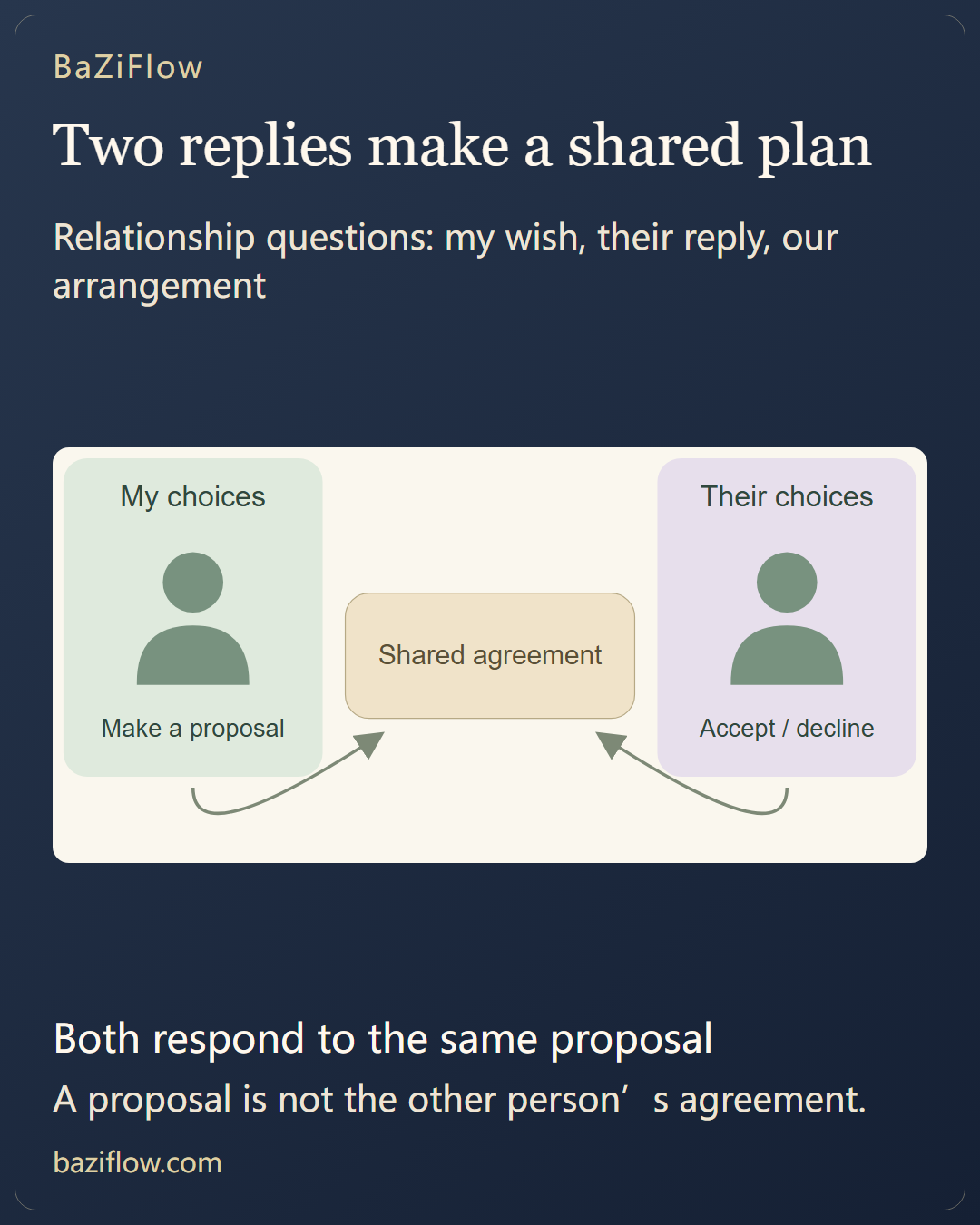
Use a shared-house planning example to separate your choices, another person’s response and decisions that require both people. Read relational imagery as a prompt, not as evidence of someone else’s consent.
The short version7 min read
The Two of Cups presents two figures responding to one another; the Lovers uses a different composition to discuss human love. Applied to an invitation, these images can prompt distinct questions about your proposal, the other person’s reply and the arrangement both have actually confirmed.
- The reciprocal gesture in the Two of Cups supplies an image cue; it does not turn one person’s wish into an agreement made by two people.
- Agreement, refusal and no reply are different states. Silence supplies neither concealed consent nor an automatic rejection.
- Overlapping free time is a scheduling condition. Willingness and practical details still require separate responses about the same proposal.
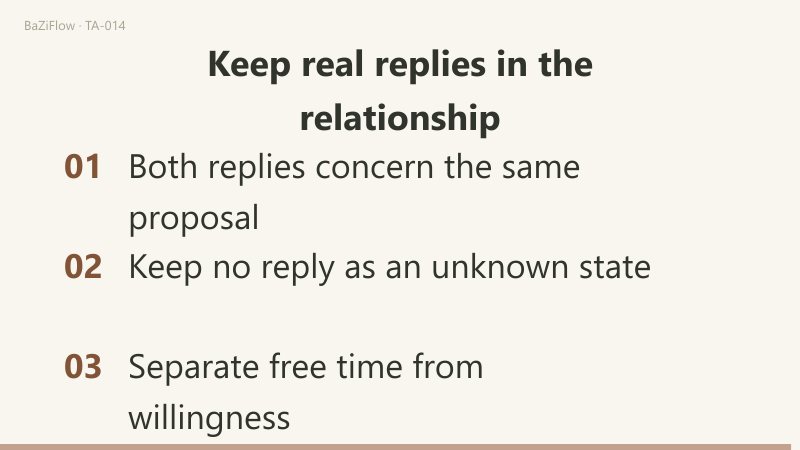
Read first
A relational image is not a recorded response
In Waite's account of the Two of Cups, two figures pledge to one another; his divinatory list includes love, passion, friendship and concord. Those are features of a historical text and its imagery. They are not evidence that a particular housemate has agreed to a particular day, a guest list or the use of the living room.
A contemporary exercise can take the image's reciprocity as a prompt: have I provided room for a genuine response, or only announced my preferred plan? That exercise is proposed here. It should not be presented as a sentence Waite wrote, or as proof that the picture describes the current relationship.
The title The Lovers can produce a similar shortcut. Waite's chapter places the image within a religious account of human love. The title alone does not establish a romantic outcome, and the pictured gender arrangement is not a requirement for the relationships of present-day readers. Historical symbolism and a real person's expressed wishes remain separate kinds of material.
A good note can therefore contain both an association and a limit: “The Two of Cups made me consider reciprocity; I still do not know whether my housemate wants guests that evening.” The second clause does not spoil the reading. It preserves the information the reading did not provide.
Compare the compositions as well. In the Two of Cups, the cups and mutual gesture place an exchange between the figures. In the Lovers, a winged figure above them, trees and Waite’s Edenic account introduce a different symbolic frame. Reducing both to “you will be together” loses the reciprocal action of one and the religious context of the other.
Two Cups
- Two figures pledge
- Reciprocal response
Lovers
- Winged figure above two people
- Waite’s human-love symbolism
Both concern two people, but composition and source interpretation differ
Begin with ownership of the decision
Take two housemates planning a small gathering at home: one is enthusiastic; the other has not yet responded to a suggested date. A reading that concludes “they secretly want this too” has crossed a boundary in the evidence. It has replaced a missing response with a story about someone else's mind.
Before drawing, write what each person can decide. You can state your preference, propose a date, explain what preparation you can handle, or withdraw your own offer. Your housemate can describe their concerns and accept or decline. An agreement about a shared space requires the relevant people to confirm it; your reading cannot supply their part of that confirmation.
This does not exclude relationships from reflective tarot practice. It gives the practice a task that can be completed honestly: clarify your proposal, notice your assumptions, and prepare to hear an answer you did not predict. A useful question might be, “What am I leaving unclear in the gathering I want to propose?” That question does not require access to another person's private thoughts.
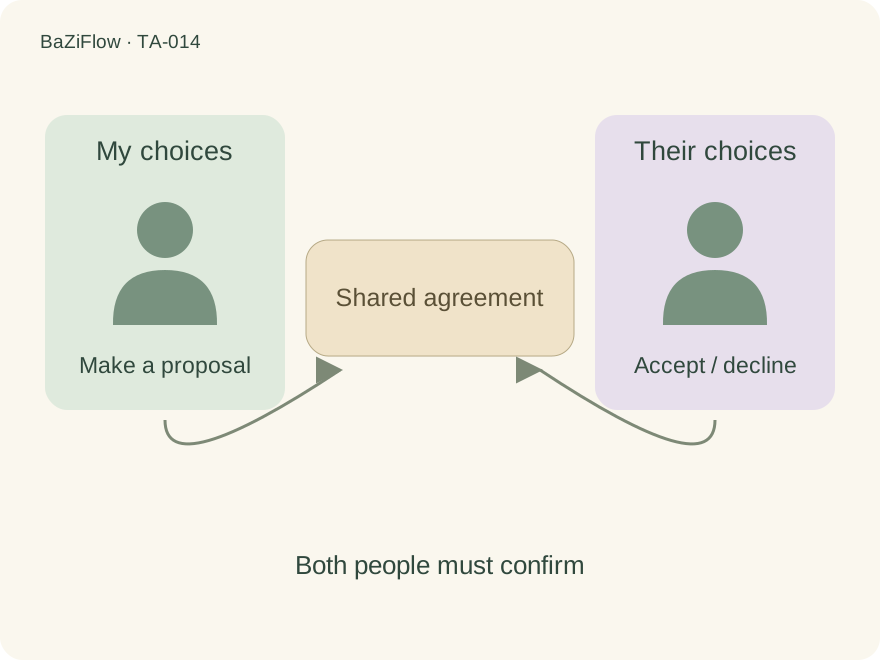
An original map of decision ownership: a proposal and a shared agreement are different stages.
Replace mind-reading with a question that can be corrected
Consider the difference between “You are worried about noise” and “Would noise be a concern for you?” The first claims knowledge; the second allows the person to confirm, reject or refine a possibility. They may identify an entirely different issue, such as needing the space for something already planned.
Eyal and colleagues' 2018 experiments did not find consistent accuracy gains from imagining another person's perspective; direct information improved accuracy in their final experiment. This was not a tarot study or a guarantee that every conversation works. It supports caution about treating a confident imagined perspective as new evidence.
In this example, a correctable proposal names the event, the date and the arrangements still open for discussion. It also permits a different answer. If the only acceptable reply is yes, the question has become a demand regardless of how gently its introduction is phrased.
| Your statement | What it can establish | What remains open |
|---|---|---|
| I would like to host six people | Your preference | Whether the shared space is available |
| I can prepare and clear up | Your offered contribution | Whether the plan works for the other person |
| Could we discuss another date? | A proposed next step | Whether they want to discuss or reschedule |
The examples are prompts for this fictional situation, not messages you are instructed to send. A reader may decide that making no proposal is the better action for their circumstances. A card should not turn an optional conversation into an obligation.
Assume
- You only worry about time
- A guess becomes their answer
Ask
- Is time or another condition difficult?
- Leave room for a different issue
A proposal that cannot be declined is not yet an open question
Suppose you want to hold a gathering in a home you share. Before choosing a card, test your intended question against an unwelcome reply. Would “not this weekend” remain an acceptable answer, or would you redraw until you found a reason to disregard it? A reflective exercise should help you notice that difference before you make the proposal.
A yes may lead to practical details. A no may lead to a smaller plan elsewhere or to no gathering. A request for time may leave the matter open. No response leaves you without a response; it does not automatically establish either concealed agreement or rejection.
You can set a time by which you will make your own alternative arrangements. That is different from setting a deadline by which another person must feel something. Be explicit about whose action is being timed. Otherwise a seemingly practical plan can smuggle an emotional demand into the reading.
If someone has already asked not to be contacted, a favourable card does not create an exception. Nor does a difficult card require confrontation. The relevant boundary comes from the person's stated position and the circumstances, not from an attempt to make an image's narrative come true.
Repeatedly drawing until you find a welcome interpretation can also hide the missing response. The guide to repeating the same question explains why changing the draw does not add information from the absent person. Preserve the original question and result if you want to inspect how your own interpretation changed.
15:00 · 15
Earlier ↔ Overlap
- My time · 14–17
- Their time · 15–16
Example: shared availability is 15–16; availability is not willingness
Review the interaction, including your contribution
Afterward, write down what was proposed, what was actually said, and what arrangement followed. Keep your feelings in a separate part of the note. “I felt reassured” is a real report about your experience, but it does not establish that your housemate held the attitude you attributed to them.
If the gathering happens, the outcome includes your proposal and the choices both people made. It should not be presented as a clean test showing that a card had detected agreement before it existed. If it does not happen, the other person has not failed to follow the reading.
A useful review may identify a concrete improvement: you named the date but omitted the expected duration, or you listened to a concern and changed the plan. These observations can guide the next conversation without turning another person's decisions into errors. See reviewing tarot records for keeping original expectations separate from later explanations.
Actual proposal
Retain the date, event and contribution actually offered.
Their response
Adjust to the actual reply without turning a general interest into a commitment.
Shared part
Mark only arrangements confirmed by both people as settled.
Questions readers ask next
Does drawing the Two of Cups establish that someone agrees?
No. Waite assigns symbolism including love, passion, friendship, concord and union, but the card is not a reply from the person involved. Use its reciprocal gesture to examine whether your invitation allows a response, then adjust the plan to the actual answer.
Why is shared free time not already an arrangement?
Availability concerns scheduling; it does not establish willingness, location or the activity itself. Even if both people are free from 15:00 to 16:00, each still needs to agree to use that time for this particular proposal.
How should I record a missing response?
Record no reply, alongside what you actually proposed and what remains unknown. You may decide when to make your own alternative arrangements, but that is not a deadline by which the other person must develop a particular feeling.
Was this article helpful?
Sources & references
- A. E. Waite, The Pictorial Key to the Tarot (1911): Part II (VI. The Lovers) and Part III §2 (Two of Cups) (public-domain text; PDF copy of the sacred-texts edition) ↗
- Eyal, Steffel and Epley (2018), Perspective mistaking, Journal of Personality and Social Psychology 114(4), 547–571, doi:10.1037/pspa0000115 ↗