

Public and personal astrology scales
Content version · · Sources & references
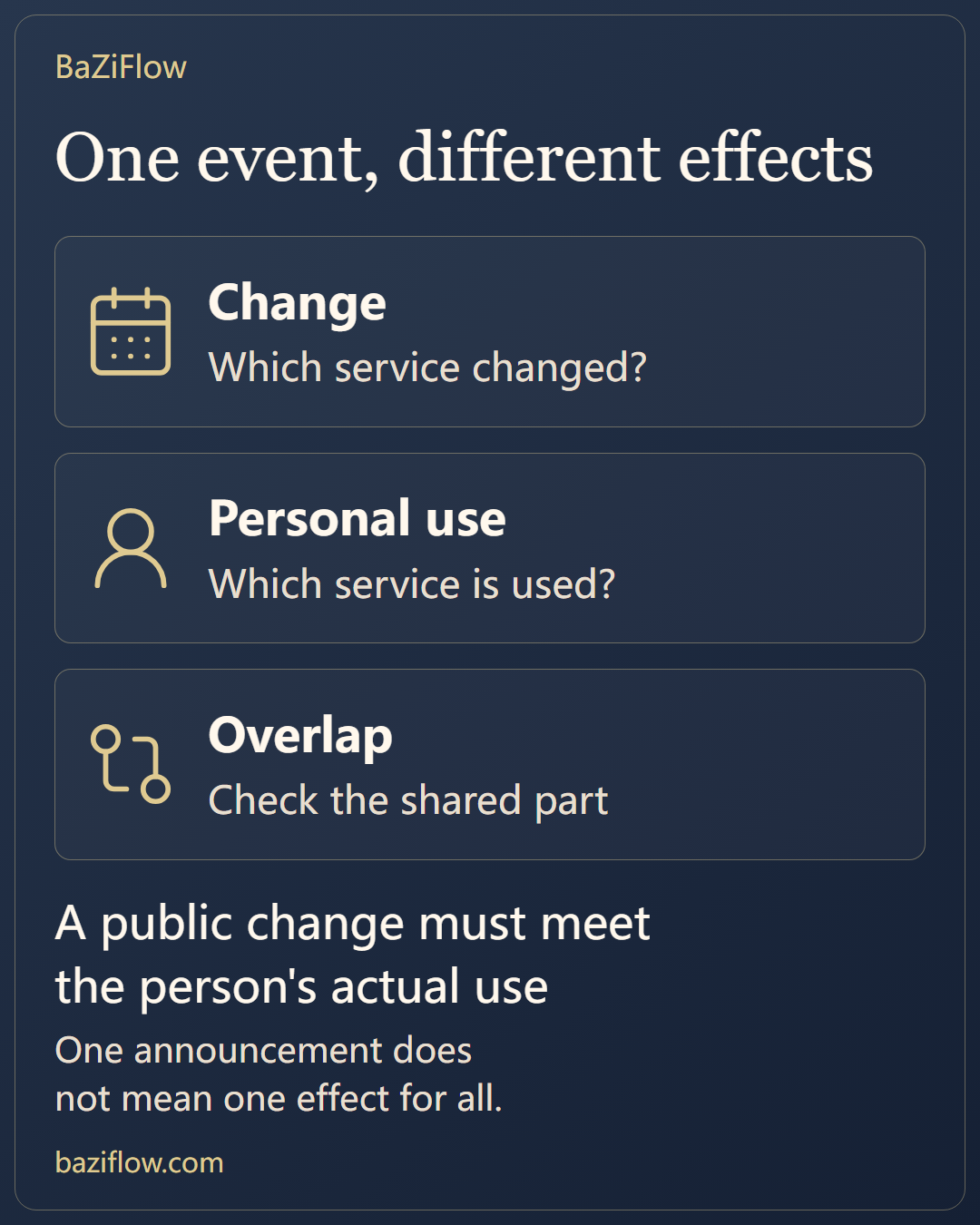
A reading-room example separates institutional records, personal experience and astrological interpretation, with a method for preserving forecasts before comparing news.
The short version6 min read
Mundane astrology addresses communities and public affairs; natal astrology refers to a particular birth. A public change reaches a person through actual service conditions and individual use. That connecting layer cannot be replaced by a change of subject.
- Cities, institutions, events and individuals are distinct subjects. Mundane and natal readings do not become interchangeable by sharing a symbol.
- An Aries ingress uses the ingress instant and a selected place; a foundation chart uses a specified historical event, not every resident’s birth.
- One public arrangement can affect users differently. The original claim, later notice and personal record support different kinds of statement.
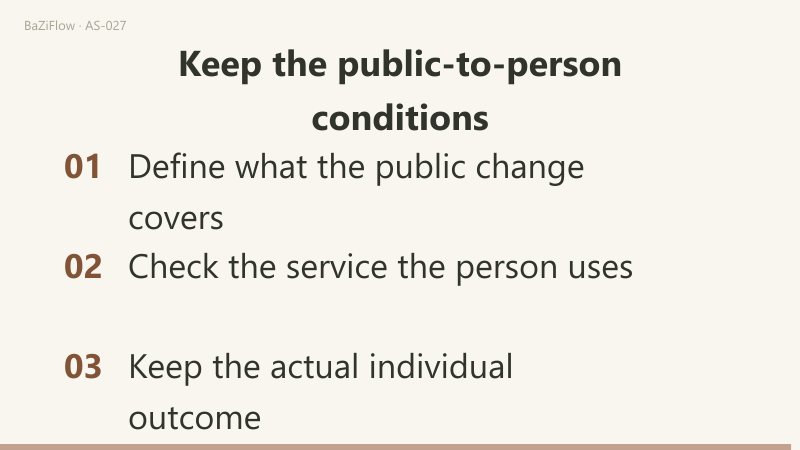
Read first
Why mundane charts are not everybody's natal chart
Mundane astrology addresses public affairs, communities and political entities. Ptolemy's Tetrabiblos, Book II, opening chapter, distinguishes general affairs from those concerning individuals. That passage documents an old division of the subject; it does not validate the book's wider claims about peoples, climates or character. Those historical assertions should not become a modern classification of residents.
A traditional Aries ingress chart takes the Sun's entry into the beginning of Aries as its event time and uses a selected location for local angles and houses. Skyscript's introduction describes this practice and states that symbols must be interpreted at the public scale. We use that source to identify the convention, not to endorse its historical forecasts. The chart is not a birth chart belonging equally to everyone living nearby.
Mundane
- States and cities
- Institutions and public affairs
Natal
- One birth reference
- One specific person
This separates subjects and scale, not accuracy or importance
Which event supplies the chart time?
Charts assigned to a country introduce a different question: which founding event was selected? A declaration, a legal commencement and a ceremony may have different timestamps. A researcher needs to name the event and explain why it was chosen. Presenting one disputed timestamp as the country's self-evident birthday hides a methodological choice. Trying several and retaining only the version that best resembles an already known event also creates a selection problem that readers should be able to see.
Some practitioners compare a leader's natal chart with public charts. That does not make the leader interchangeable with the population. A sentence about one person's symbolic profile cannot simply change its subject to millions of people. Keep the chart owner, institution, event and population named separately, even when an author proposes a relationship between them.
Aries ingress
Foundation event
Four documents that answer different questions
Imagine a council-run reading room changing its evening opening hours. No real town, date or horoscope is being analyzed here. The example is designed to separate records that are often blended in a persuasive story.
| Document | What it can help establish | What remains outside it |
|---|---|---|
| An official timetable notice | The announced hours and starting date | How every resident uses the building |
| A visitor's dated booking record | Whether a planned visit falls within the change | A general prediction about that person's future |
| An archived astrology article | What its author wrote before the notice | Whether the sky caused the change |
| A chart with documented inputs | Which symbolic calculation was performed | Whether its interpretation is empirically reliable |
A notice might affect an evening visitor while leaving an online reader unaffected. Another visitor may already have canceled for an unrelated reason. The public event is shared; the route from that event to an individual experience is conditional. Calling all these experiences one collective fate discards the very information needed to describe them accurately.
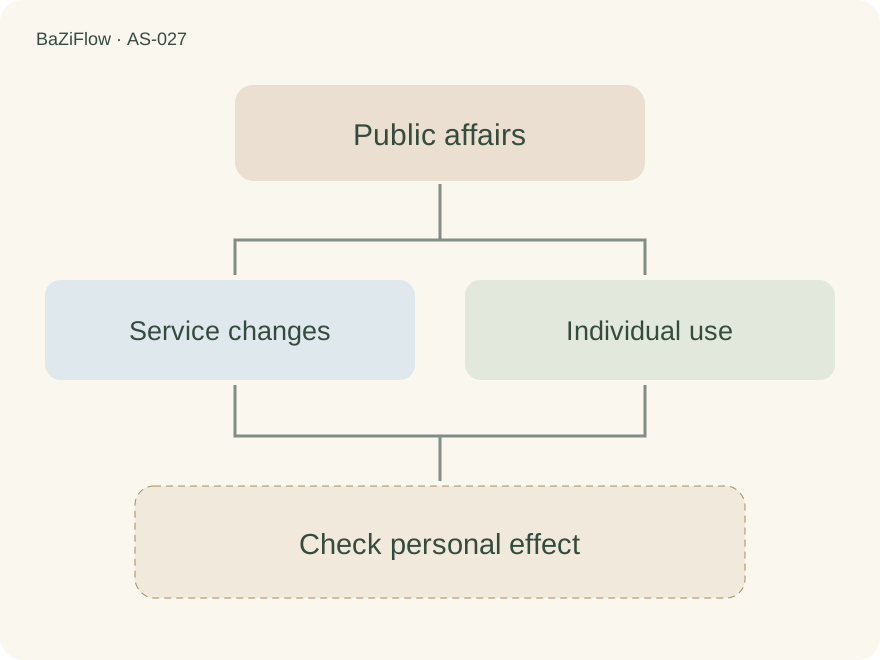
Original scope diagram. The middle level represents ordinary evidence, not an astrological technique.
The middle layer in this diagram is deliberate. It asks for the service actually changed and the individual's actual use of it. It is not an extra astrological technique. It represents ordinary evidence that must be supplied before moving from an institutional statement to a claim about a person. No line in the diagram establishes a celestial cause.
Personal use
Online use
- Overlap
- No
- This case
- Unchanged
Affected slot
- Overlap
- Yes
- This case
- Check options
Other branch
- Overlap
- No
- This case
- Unchanged
Assume only the stated branch hours change; other services stay
What would count as the same prediction?
Suppose an article says that public communication will change during a broad period. Later, a city changes a library timetable, a museum launches a newsletter, and a community radio program moves to another station. If all three are collected as confirmations, the apparent success depends heavily on what the original sentence allowed. A large scrapbook is not a substitute for a defined claim.
Before reading a mundane astrology article against the news, save its original wording, publication date, geographical scope and time window. Record the kind of event it actually named. If the author supplied no observable criterion, write “not specified”; do not improve the forecast after learning what happened. A retrospective interpretation can be interesting as interpretation, but it should retain that label.
This matters especially when public commentary reaches personal readers. “A service changed” and “this change disrupted my plans” require different evidence. “My birth chart predicted the disruption” introduces another claim again. None becomes established merely because the preceding sentence is true.
Broad topic
- Communication changes
- Roads, radio or notices might all fit
Defined event
- Named branch and hours
- Compare notice with prior booking
Compare claim scope; do not add conditions to an old forecast
A reading note with a visible limit
A useful note about the imagined reading room might say: “The announced evening schedule overlaps my planned visit. I need to check whether the booking can move. The article discusses communication broadly but does not name this institution or a comparable scheduling event in advance.” The note preserves something actionable without turning a public story into a personal decree.
Now compare: “This notice proves that all my learning plans will be blocked.” That sentence changes one timetable into all plans, an observed overlap into a causal claim, and a public discussion into a personal prediction. More eloquent symbolism does not repair those missing steps. Each expansion requires evidence of its own.
When keeping a research log, place the original claim and later observations in separate entries. Amendments should show their dates. If you narrow the location, alter the event definition or change the chart's founding time after reading the news, retain the earlier version too. Otherwise a revised explanation can masquerade as an unchanged forecast.
You can read mundane astrology as a historical and interpretive practice while remaining precise about these distinctions. Its vocabulary explains how a practitioner organizes a text; it does not replace the timetable, the booking record, or a test of predictive performance. For another example of why a chart's subject must remain explicit, see two people in relationship readings.
Original claim
Keep its original area, time window and event criteria; leave omissions visible.
Later notice
Record the actual service change and effective time.
Individual result
Use prior bookings or usage records to establish overlap and adjustment.
Questions readers ask next
Is an Aries ingress a shared natal chart for all local residents?
No. It uses the Sun’s entry into Aries and a chosen place for local angles and houses. It is a traditional public-affairs chart; residents have different birth records and different practical circumstances.
Why can one city change affect residents differently?
The change must overlap the person’s actual use. If only branch opening hours change, an online reader or a user of another branch can continue as before, while someone booked into the affected slot needs to check alternatives.
Can a precise place added afterward count as part of the original forecast?
No. Keep the original wording, publication date, scope and event criteria. A later addition is a later interpretation; silently replacing the earlier version can make a vague claim appear specific in advance.
Was this article helpful?
Sources & references
Continue reading
Horary or electional astrology? Define what the time belongs to ↗
Two people, four planet labels: keeping synastry ownership clear ↗