

Three of Cups: three cups at one height
Content version · · Sources & references
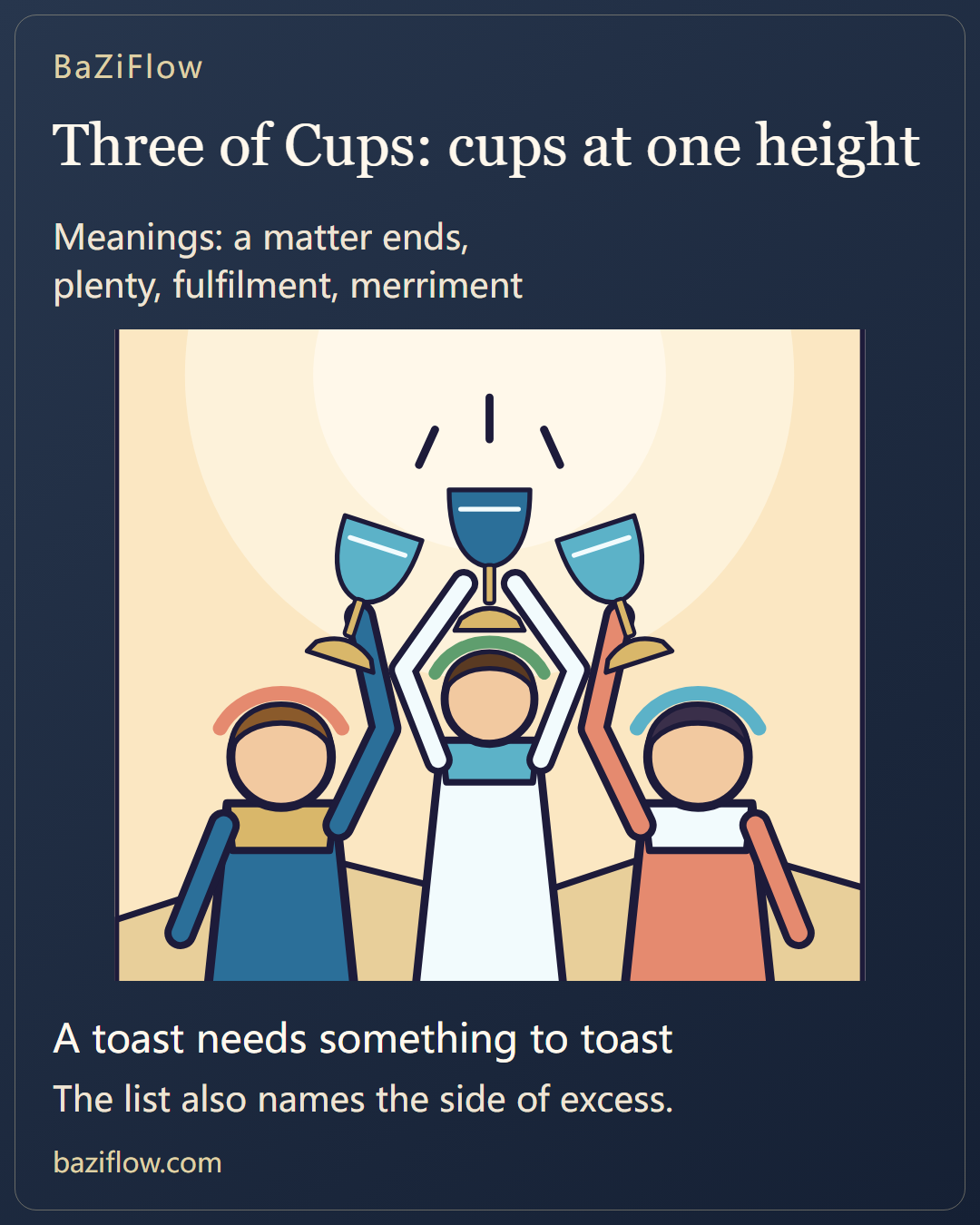
The Three of Cups shows figures raising cups high above a harvest underfoot. Separate the picture, Waite's word list and his extras, then practice asking what is being toasted before planning a class reunion.
The short version6 min read
All three cups are raised above the heads. Waite's list does not open with "party" but with "the conclusion of any matter": something was finished first, and then a circle of people lifted their cups.
- Waite's picture is one sentence: maidens in a garden-ground with cups uplifted, as if pledging one another; the wreaths, pumpkin and grapes appear only on the RWS card.
- The list opens with the conclusion of any matter, then plenty, victory, fulfilment, solace and healing, and it names the side of excess in physical enjoyment. Reversed: expedition, dispatch, achievement, end.
- The practice asks about the card's three parts: count the cups raised, ask what is toasted, and look at what lies underfoot.
Read first
Three cups meet overhead, with a harvest underfoot
Waite describes this card in a single sentence: maidens in a garden-ground with cups uplifted, as if pledging one another. The word "pledging" also appears in the Two of Cups. The difference is the headcount: there it was a pair, here it is a circle.
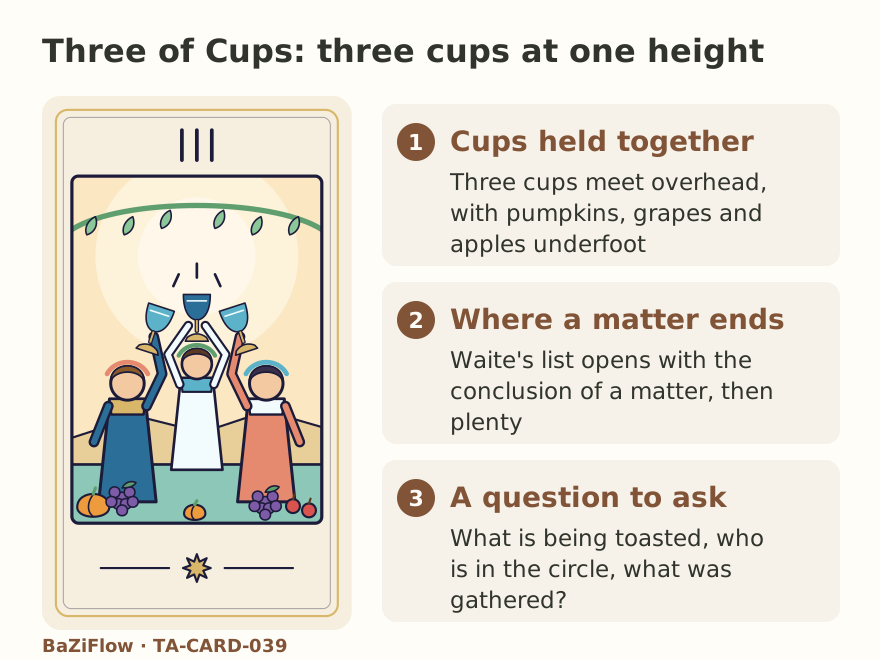
BaZiFlow original Three of Cups: cups at one height
The Rider-Waite-Smith picture carries far more than that sentence. The three women each wear a wreath, and the central one, in a red cloak, has her back to us. The figure at the left is in grey, the one at the right in orange-brown with a bunch of grapes in her hand. The three golden cups meet at one height above their heads, and on the ground lie a low bush hung with orange fruit, a pumpkin and a grape vine. Waite wrote none of these details, so the table below sets "what the picture shows" against "what Waite wrote".
Enlarge diagram · scroll sideways to read
What Waite lists: a matter ending in plenty, and the side of excess
Waite opens the divinatory meanings with a sentence about endings: the conclusion of any matter, in plenty, perfection and merriment, followed by happy issue, victory, fulfilment, solace and healing. The first item is "conclusion", and only afterwards come the pleasant states. He then adds that the card also signifies the side of excess in physical enjoyment, and the pleasures of the senses.
The conclusion of any matter in plenty, perfection and merriment ...
The reversed words are expedition, dispatch, achievement, end. Waite does not turn "merriment" into "sorrow" here. The reversed list still speaks of finishing, only with a sense of speed, of getting a thing done and sent off.
Enlarge diagram · scroll sideways to read
The raised cups, the garden ground and the produce: what is written and what is drawn
The three items come from different places. The cups and the garden are in Waite's text, the wreaths and produce are only in the RWS picture, and reading the produce as a harvest is a later borrowing.
Three details and where each comes from
- Raised cups
- Waite writes that the cups are uplifted, as if pledging one another. The same verb is used in the Two of Cups, and the two cards differ in headcount.
- Garden ground
- Waite names the setting as a garden-ground. A garden is a place that someone has tended, as opposed to open country, which is ordinary background and not his reading of this card.
- Wreaths and produce
- Not in Waite's text. The RWS picture shows wreaths, a pumpkin, grapes and a bush with fruit. Harvest scenes are often tied to celebration in Western imagery, which is traditional background.
Enlarge diagram · scroll sideways to read
The bottom layer is the one the practice below uses: the produce underfoot serves as a reminder of what this celebration has actually brought in. It is a borrowing, and should be labeled as one when you use it.
How to read it: before a class reunion, count the cups and check the harvest
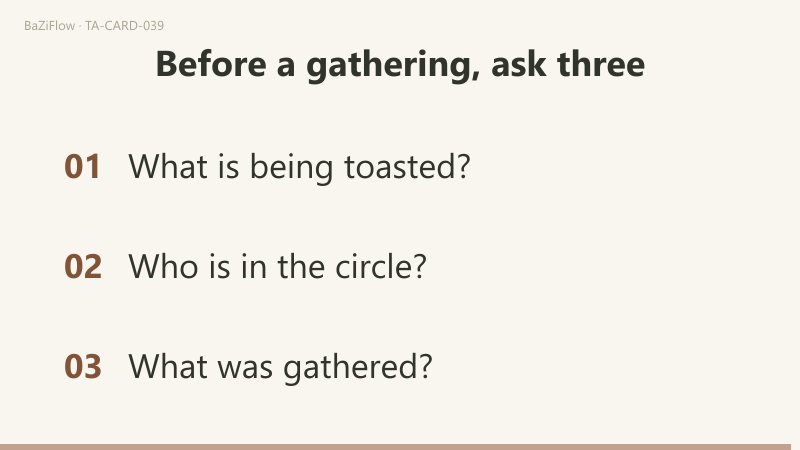
The card has three parts of its own: cups that are raised, a matter that is toasted, and a harvest on the ground. Applied to planning a tenth-anniversary class reunion, these turn into three questions:
Count the raised cups: who is in the circle
In the card each person holds one cup. In the planning, look at who has actually said they are coming, not who is on the list.
Ask what is toasted: which matter ended
The first item in the list is the conclusion of a matter. Ten years since graduation is one such occasion; when no occasion can be named, only "let's get together" is left.
Check the harvest: what has landed
Has the venue been booked, the date set, anyone willing to organize? Whatever can be written down counts as something at their feet.
Enlarge diagram · scroll sideways to read
Reversed and neighboring cards: three cups turned over, "get it done"
In the additional list the reversed entry reads consolation, cure, end of the business, which echoes the main entry's expedition, dispatch, achievement, end. Both land on getting a matter finished. Later phrases such as a canceled party, gossip or overindulgence come from other methods and need their source named.
Four Cups cards, four places for the topic
Two raise cups to one point
The same pledging, with two people, so the question is what each side said.
One person content at a feast
Waite lists concord, contentment and physical well-being, and says the picture offers only the material side; the enjoyment sits with one person.
A family beneath a rainbow of cups
Waite writes of the repose of the whole heart and a home scene beyond; the merriment widens from a circle to a household.
Enlarge diagram · scroll sideways to read
Questions readers ask next
Is the Three of Cups simply the party card?
A party is one scene it can fit. Waite's list opens with the conclusion of any matter, and plenty and merriment describe how that conclusion feels. Ask first which matter has ended, then decide whether it resembles a party.
Is the Three of Cups bad when reversed?
Not from Waite's words: reversed he gives expedition, dispatch, achievement, end, and the extras give consolation, cure and the end of the business. Later phrases such as gossip or overindulgence come from other methods.
Did Waite write about the pumpkin and grapes at the feet?
His text mentions only a garden-ground and cups uplifted. The wreaths, the fruit and the grapes are details of the RWS picture, so say so when you cite them.
Was this article helpful?
Sources & references
Continue reading
Four of Wands: four staves hold a garland, meanings "almost on the surface" ↗