

Scheduling investment research and review days (not investment advice)
The boundary first: this scenario does not predict markets, does not suggest direction, and is not investment advice in any form. What it is for is scheduling your own research days, your reviews, and the days you execute a plan you already committed to. The weighting sits on the wealth dimension and on focus, and it actively avoids the days that pull your attention outward.
Investing Decision
Research, review, and executing an already-set plan (not buy/sell advice)
This chart shows the weighting table inside the engine rather than a date range, so it looks the same every day — and that table is exactly why this scenario picks different days from the other six.
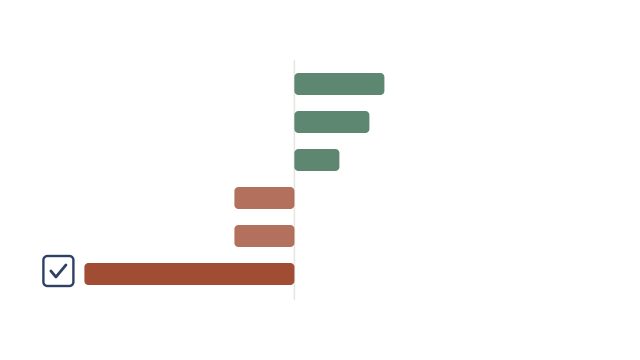
Focus over social energy
The wealth dimension carries the most weight, and peach-blossom days are explicitly penalized — this scenario wants a quiet head, not a busy one.
Study hours rank first
Hours ruled by the resource ten gods suit reading and absorbing; the impulsive ones are scored down.
No market input at all
The tool reads no market data. It compares your own days, and every trading decision and consequence remains yours.
What it will not do, before what it will
This is the only one of the seven scenarios that has to state a boundary first. It goes at the top because putting date selection and investing on the same page invites exactly one misreading — "which day should I buy" — and that is not what this is.
Will not
No market prediction, no instruments, no entry or exit timing, no market data of any kind, and no investment advice. There is no market judgment anywhere on this page because the tool has no market input.
Will: research days
Reading filings, working through material, building a model — work that needs a long quiet stretch. The weighting sits on wealth and focus, and days that pull your attention outward are penalized.
Will: review days
Going back over your own decision record. The enemy of a review is unspent emotion, so picking a day you are calmer beats picking an "auspicious" one.
Will: execution days
The day you carry out a plan you already committed to. You wrote the plan; the tool only helps you put it on a day you are less likely to talk yourself out of it.
The most common misuse: reading a research day as an entry day
This one is worth repeating, because it is the only misreading across these seven pages that can cost real money. A day this tool ranks higher means you are better placed to sit down with the material and less likely to be pushed by feeling. It says nothing about how the market moves that day — it cannot, because it has no market input at all. Using this order as entry or exit timing is entirely at your own risk, and it is not a use we consider the tool to have.
If what you want is a buy or sell call, this page cannot help and is not trying to. If what you want is to schedule the work that needs a cool head, put the next month into the tool above.
Will it tell me when to buy?+
No, and it will not. This scenario is only for scheduling research, review, and executing a plan you already made.
Then what is it good for?+
For keeping the decisions that need a cool head off the days you are likeliest to be impulsive or distracted.
Why penalize a peach-blossom day here?+
In this scenario it reads as a distraction signal — social pull and outside attention rising — which runs against work that needs independent judgment.